
Master Office Moving Costs: 5 Steps to Budget Effectively
Master office moving costs with effective budgeting strategies to ensure a smooth transition.

Introduction
Many businesses underestimate the challenges involved in relocating their offices, particularly when it comes to managing costs. With expenses often spiralling out of control, understanding how to budget effectively is crucial for any business planning a move. This guide will help you navigate the intricacies of office moving costs effectively, providing actionable steps that empower organisations to make informed financial decisions.
What hidden expenses could arise, and how can businesses brace themselves for unforeseen challenges during this transition?
Assess Your Office Size and Layout
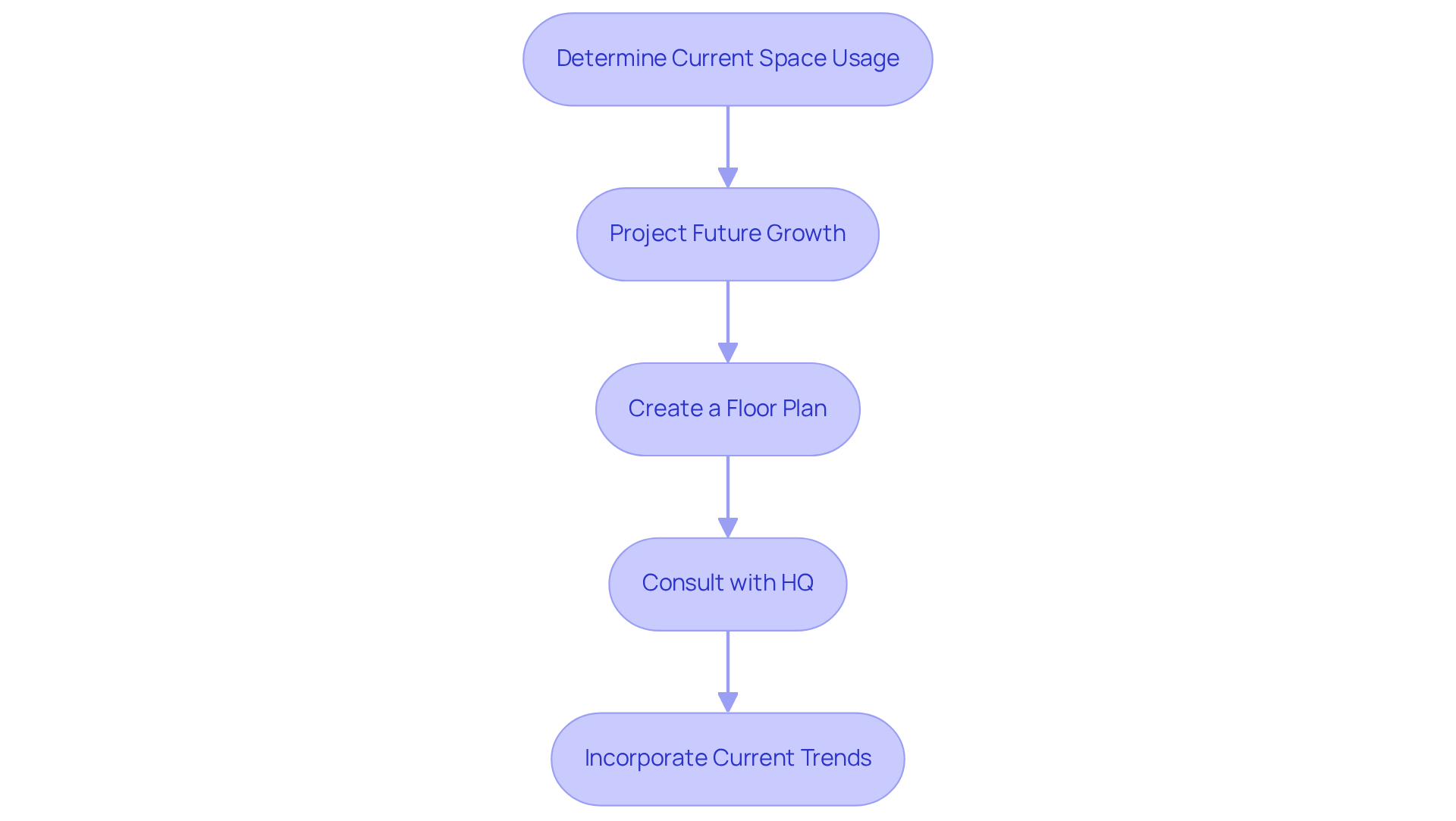
- Determine Current Space Usage: Evaluating your current workspace layout is essential for effective space management. Measure the total square footage and identify how much space is allocated to different functions (e.g., workstations, meeting rooms, storage). Understanding your current space allocation can be challenging without a clear assessment of your needs and future requirements.
- Project Future Growth: Consider your company's growth trajectory. If you anticipate hiring more employees, factor in additional space requirements. It is advisable to allocate between 100 and 150 square feet per employee, contingent upon your business model.
- Create a Floor Plan: Use software or graph paper to sketch a floor plan of your current workspace. This visual representation will help you identify areas that can be optimised or need to be expanded in the new space.
- Consult with HQ: Engaging with HQ's expertise in workspace solutions can provide valuable insights into finding the right type of workspace-whether traditional leased suites, serviced suites, or coworking areas-that fits your size and layout needs. Consulting with Flux HQ, which offers extensive design, fitout, and project management services, can ensure your workspace plans are effectively realised, resulting in a tailored layout that reflects your brand and enhances employee experience.
- Incorporate Current Trends: Stay informed about the latest workspace layout trends in 2026, such as the shift towards activity-based working environments that prioritise collaboration and flexibility. Understanding these trends can guide your decisions and enhance employee satisfaction.
By following these steps, you can effectively evaluate your workspace size and layout, ensuring that your new area supports your business's growth and operational efficiency. Furthermore, selecting a workspace in the City of London not only facilitates growth but also strategically aligns your business with industry leaders.
Evaluate Distance and Route Complexity
- Measure the Distance: It is crucial to measure the distance between your current office and the new location using reliable mapping tools. This measurement is essential as it directly affects the office moving cost, which can fluctuate considerably depending on distance.
- Assess Route Complexity: Consider potential challenges along the route, including traffic congestion, road restrictions, or construction zones. These factors can result in heightened time and expenses during the relocation, especially in bustling regions such as the City of London or Shoreditch.
- Consider Accessibility: Assess the accessibility of both locations for transport trucks. Ensure that the new office has sufficient loading areas and parking for the relocation team, as accessibility challenges can complicate logistics and raise expenses.
- Plan for Transportation Expenses: In light of the distance and route complexity, it is advisable to estimate transportation expenses. Include considerations for fuel, tolls, and potential overnight accommodations for the relocation team if necessary. In 2026, the average office moving cost per mile for relocations in London can vary, so obtaining detailed quotes from logistics professionals can provide clarity on these expenses.
- Utilise Flux HQ's Office Space Calculator: To enhance your planning, utilising Flux HQ's Office Space Calculator may prove beneficial. This tool enables you to assess space for hybrid teams, considering both private workspaces and shared desks. It provides tailored solutions based on your specific needs, helping you to plan flexible desk and collaboration areas effectively. Furthermore, the calculator can aid in estimating expenses, ensuring you maintain budget control and clarity in your workspace rentals.

Identify Required Moving Services
- List Essential Services: Planning an office move requires careful consideration of essential services to ensure a seamless transition. Common offerings include packing, loading, transportation, unloading, and unpacking. Additionally, assess if specialised services are required for IT equipment or sensitive materials, as these can significantly impact the move's success.
- Get Quotes from Relocation Services: Reach out to several transport firms to collect estimates. Ensure each quote provides a detailed breakdown of services included, allowing for effective comparison. This step is essential as office moving costs can escalate quickly; for example, charges for long-distance transfers with firms like Mayflower can range from £10,000 to £17,000 based on the service level and distance.
- Evaluate Additional Services: Consider whether you need supplementary services such as storage solutions, furniture assembly, or IT setup. Although these services may raise costs, they are crucial for a smooth transition and reducing downtime. Using virtual surveys or video walkthroughs can really help improve the accuracy of your relocation estimates, making it easier to plan effectively.
- Consult with HQ: Leverage HQ's extensive network and expertise in the London market to connect with reputable moving companies that offer comprehensive services tailored to your specific needs. Their personalised approach, including the assignment of a dedicated Account Manager, ensures that you receive ongoing support throughout the relocation process. Additionally, the Flux HQ app allows you to manage workspace needs efficiently, helping you navigate the complexities of office moves and select the right partners for your transition.

Plan for Hidden Costs and Contingencies
- Identify common hidden costs: Office moving costs frequently conceal expenses that can disrupt your financial planning. Common hidden expenses include utility setup fees, cleaning services, and potential renovations in the new space. Statistics indicate that common overlooked expenses include IT setup, downtime during the move, and overlapping lease payments. Failure to identify these hidden costs, such as office moving cost, can lead to significant budget overruns, jeopardising the financial stability of your organisation during the transition.
- Set Aside a Contingency Fund: It is prudent to allocate an additional 10-20% of your total moving budget for unforeseen expenses. This contingency fund will assist in addressing any unexpected office moving costs that may arise during the move, such as last-minute IT setup or extra cleaning services necessary to fulfill lease obligations.
- Review Lease Agreements: Thoroughly examine your current and new lease agreements for any clauses that may result in extra expenses. Look for early termination fees, security deposits, and responsibilities to return the space in its original condition, as these can lead to unexpected expenses if not addressed beforehand.
- Consult with Flux HQ: Consider reaching out to Flux HQ to identify any hidden expenses that may arise during your move. Their extensive market expertise and thorough lease negotiation services, including support with workspace design and the disposal or sub-letting of current spaces, can help ensure that your budget is all-encompassing. Understanding these hidden costs is essential to safeguarding your organisation's financial health during a move.

Implement Cost-Saving Strategies
- Declutter Before the Move: Before embarking on a relocation, it is prudent to streamline your office by decluttering unnecessary items. Disposing of or donating these items can significantly lower the office moving cost, as many companies overlook the financial impact of unnecessary items. Additionally, under the UK's WEEE Regulations, ensure the ethical disposal of redundant hardware to facilitate the decluttering process.
- Negotiate with Movers: Engage in negotiations with relocation companies to secure better rates, particularly when utilising multiple services. Many movers are willing to offer discounts for bundled services, leading to substantial savings. Industry specialists note that the office moving cost for transporting equipment constitutes only a small part of overall relocation expenditures, making it crucial to explore all options for cost reduction. Failing to seek competitive rates can result in substantial financial losses over time.
- Schedule Wisely: Timing your move during off-peak periods, such as mid-week or mid-month, can yield lower rates from moving companies. This strategic scheduling not only helps in reducing costs but also ensures a smoother transition with less competition for resources.
- Utilise Flux HQ's Tools: Leverage Flux HQ's advanced AI Workspace Search and Workspace Space Calculator tools to identify cost-effective workspace solutions that align with your budget and operational needs. These tools provide valuable insights into the London workspace market, assisting you in making informed choices that can lead to significant savings. Additionally, consider implementing a structured 12-month plan for your relocation to ensure all aspects are covered and to avoid last-minute expenses. Furthermore, explore how modern monitoring solutions can track usage patterns and optimise office space, enabling you to make informed decisions about resource allocation.

Conclusion
Navigating the financial intricacies of office relocation is paramount for businesses seeking to maintain stability during transitions. Effective budgeting and planning enable organizations to navigate the complexities of relocation and reduce the risk of unexpected expenses. The strategies outlined in this guide empower businesses to take control of their office moving costs, ensuring a smooth and efficient relocation process.
Key insights include:
- The importance of assessing office size and layout
- Evaluating distance and route complexity
- Identifying essential moving services
- Recognising hidden costs
- Implementing cost-saving strategies
Collaborating with industry experts ensures that every aspect of the relocation is meticulously planned and executed.
Ultimately, the success of an office relocation hinges on meticulous planning and a proactive approach to budgeting, paving the way for sustainable growth. By prioritising thorough planning and leveraging available tools and expertise, businesses can achieve a successful move that aligns with their growth objectives. Embracing these budgeting tips will lead to a more strategic and cost-effective office relocation, setting the stage for future success.
Frequently Asked Questions
How can I assess my current office size and layout?
To assess your current office size and layout, measure the total square footage and identify how much space is allocated to different functions such as workstations, meeting rooms, and storage. This evaluation helps in understanding your current space usage and future requirements.
What should I consider regarding future growth when evaluating office space?
When evaluating office space for future growth, consider your company's growth trajectory and anticipate hiring more employees. It is advisable to allocate between 100 and 150 square feet per employee, depending on your business model.
How can I create a floor plan for my office?
You can create a floor plan by using software or graph paper to sketch your current workspace. This visual representation will help identify areas that can be optimized or need expansion in the new space.
Why is it important to consult with HQ when planning office space?
Consulting with HQ can provide valuable insights into finding the right type of workspace that fits your size and layout needs. Engaging with experts like Flux HQ can ensure your workspace plans are effectively realized, resulting in a tailored layout that enhances employee experience.
What current trends should I incorporate into my office layout?
Stay informed about workspace layout trends, such as the shift towards activity-based working environments that prioritize collaboration and flexibility. Understanding these trends can guide your decisions and enhance employee satisfaction.
How do I measure the distance for a potential office move?
Measure the distance between your current office and the new location using reliable mapping tools. This measurement is crucial as it directly affects the office moving cost.
What factors should I consider regarding route complexity during an office move?
Consider potential challenges along the route, such as traffic congestion, road restrictions, or construction zones, as these can increase time and expenses during the relocation.
How can I assess the accessibility of the new office location?
Assess the accessibility of both locations for transport trucks, ensuring that the new office has sufficient loading areas and parking for the relocation team. Accessibility challenges can complicate logistics and raise expenses.
What should I plan for regarding transportation expenses during the move?
Estimate transportation expenses by considering fuel, tolls, and potential overnight accommodations for the relocation team. Obtaining detailed quotes from logistics professionals can provide clarity on these expenses.
How can Flux HQ's Office Space Calculator assist in planning?
Flux HQ's Office Space Calculator can help assess space for hybrid teams by considering both private workspaces and shared desks. It provides tailored solutions based on your specific needs and aids in estimating expenses, ensuring budget control and clarity in workspace rentals.
List of Sources
- Assess Your Office Size and Layout
- 5 Steps to Effective Office Space Planning in 2026 (https://hubstar.com/blog/effective-office-space-planning-2026)
- Office Space Requirements: The Complete 2026 Guide to Planning Your Workspace (https://elia.io/blog/office-space-requirements-the-complete-2026-guide-to-planning-your-workspace)
- How Much Office Space Do You Need Per Employee in 2026? – Smart Planning with Canvas Offices (https://canvasoffices.co.uk/news/how-much-office-space-do-you-need-per-employee-in-2026-smart-planning-with-canvas-offices)
- How Much Office Space Per Employee: The Complete Guide for 2026 (https://anny.co/en/blog/how-much-office-space-per-employee-the-complete-guide-for-2026)
- 7 Office Space Planning Tips for Hybrid Work in 2026 (https://hughesmarino.com/blog/2026/07/09/7-office-space-planning-tips-for-hybrid-work-in-2026)
- Evaluate Distance and Route Complexity
- 10 Essential Steps for a Smooth Office Relocation in 2026 (https://hughesmarino.com/blog/2026/03/03/10-essential-steps-for-a-smooth-office-relocation-in-2026)
- Office Relocation Costs Price Breakdown for UK Business 2026 (https://sumomove.co.uk/blog/office-relocation-cost-guide.html)
- Planning an Office Move: When and How to Prepare - COEL (https://coel.co.uk/planning-an-office-move-when-is-the-right-time-and-how-can-you-plan-ahead)
- Office Move Costs: Get a Transparent Quote Today (https://bestwayrelocation.co.uk/office-move-cost)
- Identify Required Moving Services
- 📝 How to Get a Moving Quote: A Step-by-Step Guide (https://allmovesuk.co.uk/news/how-to-get-a-moving-quote)
- Best Moving Companies of 2026 (https://realestate.usnews.com/home-services/moving/best-moving-companies)
- 10 Essential Steps for a Smooth Office Relocation in 2026 (https://hughesmarino.com/blog/2026/03/03/10-essential-steps-for-a-smooth-office-relocation-in-2026)
- Office Move Checklist 2026 | 12-Week Business Relocation Plan (https://fsmithandson.co.uk/news/office-move-checklist-2026-the-12-week-business-relocation-plan)
- News & Insights | Ede's Commercial Relocation Experts (https://edes.com/news)
- Plan for Hidden Costs and Contingencies
- Office Move Budget: Cost Guide & Planning Tips [2026] (https://runwayea.st/blogs/budgeting-for-an-office-move)
- The Hidden Costs of an Office Move: A... | Cloudswitched (https://cloudswitched.com/blog/hidden-costs-office-move-it-relocation-budget-uk-2026)
- The Hidden Costs of a Poorly Planned Office Move and How to Avoid Them - Johnsons Business Moves (https://johnsonsbusinessmoves.co.uk/featured/the-hidden-costs-of-a-poorly-planned-office-move-and-how-to-avoid-them)
- 5 Additional Costs You Should Consider When Moving Office | Hubble (https://hubblehq.com/blog/additional-costs-when-moving-office)
- Moving Office? Beware of These Hidden Costs | Strategy Hat (https://strategyhat.co.uk/blog/moving-office-beware-these-hidden-costs)
- Implement Cost-Saving Strategies
- Removals and Storage | Removals | Pickfords (https://pickfords.co.uk/blog/essential-office-moving-tips)
- Office Relocation Project Plan UK: The 2026 Strategy Guide for Businesses (https://goldfishremovals.co.uk/post/office-relocation-project-plan-uk-the-2026-strategy-guide-for-businesses)
- The Hidden Costs of an Office Move: A... | Cloudswitched (https://cloudswitched.com/blog/hidden-costs-office-move-it-relocation-budget-uk-2026)
- How to Reduce Workplace Costs in 2026 (https://eposnow.com/uk/resources/how-to-reduce-workplace-costs-2026)
- 5 Cost Saving Tips for Your Office Move (https://linkedin.com/pulse/5-cost-saving-tips-your-office-move-gurpreet-singh)
More Articles
Back to Industry Knowledge
Service Office Space: A Fit-First Decision Guide for UK Growing Businesses
Assess serviced office space for headcount, working needs, growth, costs and flexibility before requesting indicative options from Flux HQ.

Is Serviced Office Space Right for Your Growing UK Business?
Assess whether serviced office space fits your growing UK business, from capacity and total cost to contract terms and broker requirements.

Is Service Office Space Right for Your Growing UK Business?
Assess serviced office space for your UK business, compare capacity and costs, and prepare a broker-ready requirement.

