
What Is Subletting? Key Insights for Startup Founders
Discover what is sub letting and its implications for startups and landlords in today's market.
Introduction
As startups grapple with the complexities of commercial real estate, subletting has emerged as a strategic solution that optimises rental expenses while providing essential flexibility. While it generates income from unused space, it also brings responsibilities and potential risks that require careful management. This evolution necessitates a strategic approach to subletting that balances opportunity with risk management. This raises an important question: how can startup founders leverage subletting effectively while safeguarding their interests?
Define Subletting: Understanding the Concept
Subletting presents a unique opportunity for original occupants to leverage their rented properties, yet it also introduces significant responsibilities.
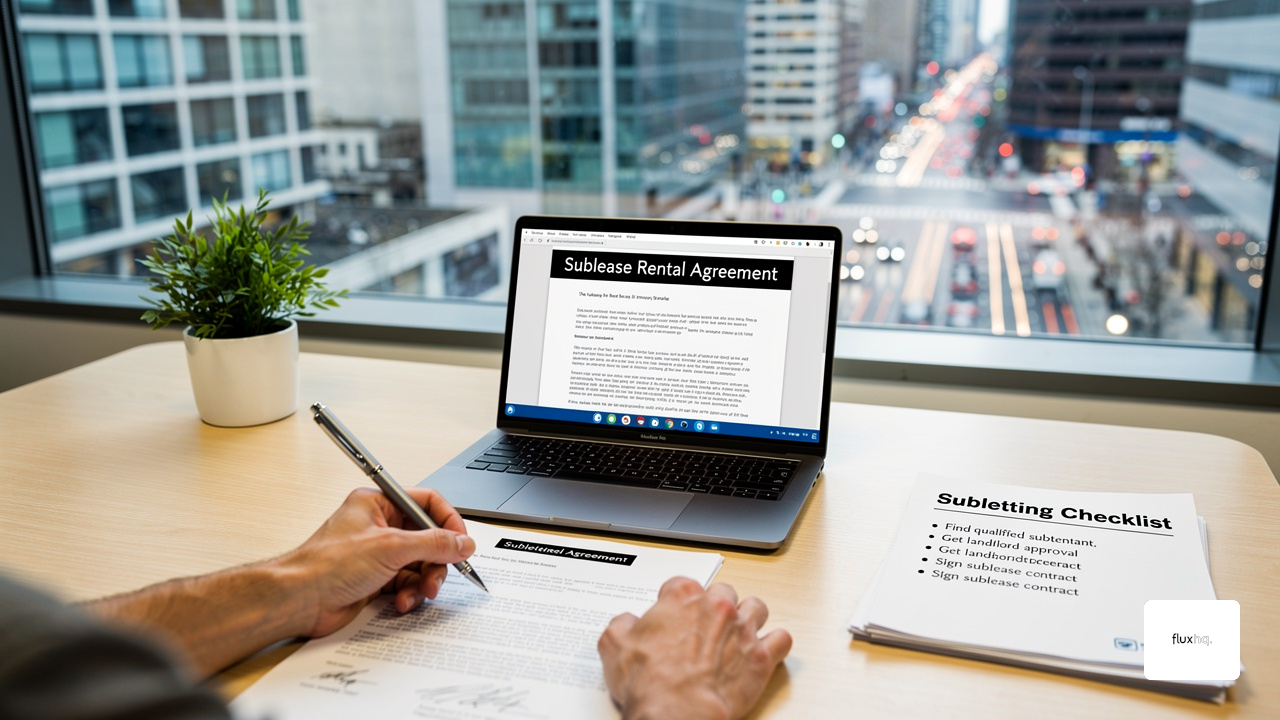
What is subletting? It refers to the process where an occupant, known as the original occupant, rents out all or part of their rented property to another party, referred to as the subtenant, while still retaining their obligations under the original agreement with the landlord.
This arrangement enables the original occupant to either generate income from unused space or lower their rental costs, particularly advantageous for startups aiming to manage office expenses.
However, this arrangement carries the risk of financial liability for the original occupant if the subtenant fails to meet their obligations. This means that the original occupant must carefully consider the reliability of any potential subtenant.
Significantly, the initial occupant remains accountable for fulfilling lease terms, including rent payments, even if the sublessee defaults. This situation is particularly pertinent today, as businesses strive for flexibility and cost efficiency in adapting to hybrid working models.

Contextualize Subletting: Importance for Landlords
For property owners, understanding what is sub letting often presents a complex dilemma. On one hand, it allows them to maintain rental income during periods when their main occupant may not be able to make full use of the space. This is especially advantageous in volatile markets, as vacancies can result in considerable financial strain for property owners. Conversely, property owners may face risks such as losing control over who occupies their premises and potential damage caused by subtenants, highlighting the importance of understanding what is sub letting. This can result in unexpected costs and complications for property owners. Consequently, many property owners include specific clauses in rental agreements that govern secondary rentals, requiring tenants to obtain approval before proceeding. This allows property owners to vet subtenants effectively and uphold the integrity of their properties.

Evaluate Risks and Benefits: What Landlords Should Consider
When evaluating rental agreements, property owners must carefully consider the balance between potential income and associated risks. A key benefit of rental agreements is the potential for consistent income, which can significantly reduce vacancy rates. For instance, when a tenant participates in what is subletting by subletting part of their office space, it can generate additional revenue that ensures landlords receive consistent payments, even during periods of reduced occupancy. This arrangement can be particularly beneficial in competitive markets like London, where approximately 562 properties are lost from the market daily, highlighting the importance of maintaining occupancy.
Nevertheless, this practice is not without its challenges, as renting to another tenant introduces several risks. Non-compliance by subtenants can result in financial losses and disputes, which can be detrimental to property owners. Furthermore, certain rental agreements completely prohibit secondary rentals, which property owners need to recognise to prevent legal issues. Moreover, property owners may face challenges in upholding rental contracts if they are not directly engaged with the subtenant. Consequently, property owners may incur additional costs and time managing these unforeseen issues.
To reduce these risks, it is crucial for property owners to create clear policies for renting out space and perform comprehensive background checks on prospective subtenants. Numerous agreements necessitate property owners to give written approval for subleasing, leading to inquiries about what is subletting, and some specify that the rent under the subagreement cannot be less than the existing rent. Legal counsel is frequently suggested to navigate the complexities of rental agreements, ensuring adherence to lease terms and minimising potential liabilities. Furthermore, property owners should be ready for operational difficulties, as data indicates that 50% of maintenance requests come in outside office hours, which can complicate management. By implementing these strategies, property owners can not only safeguard their investments but also enhance their overall rental experience.

Explore Legal Considerations: Navigating Subletting Regulations
Understanding what is sub letting office space is essential for navigating the complexities and legal obligations involved, as well as avoiding potential pitfalls. Most business rental agreements include specific provisions regarding what is sub letting, often necessitating written approval from the property owner. Failure to comply with these requirements may result in rental violations and eviction, highlighting the need for a clear understanding of rental terms. Landlords must also ensure their insurance policies adequately cover subletting arrangements; otherwise, unauthorized subletting could void coverage and expose them to financial risks.
Tenants must be aware of their rights and duties under the rental contract, which typically includes obligations to maintain the property and comply with building regulations. For instance, if a renter sublets without the necessary approval, they risk losing their rental agreement and forfeiting income from the sublet. Legal advice is crucial in these situations, as it can help both parties understand what is sub letting and navigate the intricacies of subletting agreements to avoid costly disputes.
Case studies illustrate the importance of these legal considerations. For example, an occupant who sublet their area without property owner approval encountered eviction, underscoring the dangers of disregarding rental agreements. Conversely, a tenant who effectively arranged a sublease with appropriate legal advice was able to earn revenue from unused space while ensuring adherence to their initial agreement.
In 2026, the legal environment regarding secondary leasing has changed, with the government intending to prohibit upwards-only rent reviews in commercial leases. This shift in the legal landscape could lead to increased reluctance among landlords to enter into new rental agreements, particularly as one in four are currently in rent arrears. Startups should stay informed about these changes and consult legal professionals to ensure compliance and protect their interests in subletting arrangements.

Conclusion
Subletting presents both opportunities and challenges for original occupants, particularly startup founders, seeking to optimise their rental arrangements. By allowing subtenants to occupy unused space, original occupants can alleviate financial burdens and enhance flexibility in their operations. However, this arrangement requires a clear understanding of the responsibilities and risks involved, as the original occupant is still liable for the lease terms.
The article delves into the multifaceted nature of subletting, highlighting its benefits for both tenants and landlords. For tenants, subletting can provide a means to generate income or reduce costs, while landlords can maintain rental income during vacancies. Yet, navigating the complexities of subletting can be fraught with challenges, particularly regarding legal obligations and tenant behaviour. Legal considerations further complicate the landscape, emphasising the need for both parties to be well-informed about their rights and obligations.
Ultimately, grasping the nuances of subletting is essential for success. As the commercial real estate market evolves, particularly with anticipated regulatory changes, both landlords and tenants must remain vigilant and proactive. Engaging legal counsel and crafting comprehensive subletting agreements can safeguard interests and foster a more harmonious rental experience. Embracing the opportunities presented by subletting, while being mindful of the inherent challenges, can lead to a more sustainable and profitable approach in the dynamic world of commercial real estate.
Frequently Asked Questions
What is subletting?
Subletting is the process where an original occupant rents out all or part of their rented property to another party, known as the subtenant, while still retaining their obligations under the original agreement with the landlord.
What are the benefits of subletting for the original occupant?
Subletting allows the original occupant to generate income from unused space or lower their rental costs, which can be particularly advantageous for startups managing office expenses.
What responsibilities does the original occupant have when subletting?
The original occupant remains accountable for fulfilling lease terms, including rent payments, even if the subtenant fails to meet their obligations.
What risks are associated with subletting?
The original occupant faces financial liability if the subtenant does not fulfill their obligations, making it essential to carefully consider the reliability of potential subtenants.
Why is subletting relevant in today's business environment?
Subletting is particularly relevant as businesses seek flexibility and cost efficiency in adapting to hybrid working models.
List of Sources
- Define Subletting: Understanding the Concept
- Subletting by tenants on Airbnb now 'growing problem' says NRLA (https://landlordzone.co.uk/news/subletting-by-tenants-on-airbnb-now-growing-problem-says-nrla)
- BGH Puts a Stop to the "Airbnb Business Model": No Profit-Making Through Subletting (https://heuking.de/en/news-events/newsletter-articles/detail/bgh-puts-a-stop-to-the-airbnb-business-model-no-profit-making-through-subletting.html)
- Subletting in the hybrid era: What tenants and landlords need to know | Newmanor Law (https://newmanor.com/subletting-in-the-hybrid-era-what-tenants-and-landlords-need-to-know)
- Define Sublet: A Step-by-Step Guide for Startup Founders (https://flux-hq.com/articles/define-sublet-a-step-by-step-guide-for-startup-founders)
- Unlocking Profit Potential: The Ultimate Guide to Subletting Your Commercial Space - Accountants Birmingham and Droitwich (https://salhanaccountants.co.uk/latest-news/unlocking-profit-potential-the-ultimate-guide-to-subletting-your-commercial-space)
- Contextualize Subletting: Importance for Landlords
- New Renters’ Rights Act: Important update for homeowners and shared owners who sublet | Triathlon Homes (https://triathlonhomes.com/new-renters-rights-act-important-update-for-homeowners-and-shared-owners-who-sublet)
- Subletting in the hybrid era: What tenants and landlords need to know | Newmanor Law (https://newmanor.com/subletting-in-the-hybrid-era-what-tenants-and-landlords-need-to-know)
- Subletting Explained: What Landlords Need to Know. (https://nolettinggo.co.uk/blog/what-is-subletting-landlords)
- Behind every lease, a hidden risk: The rise of subletting scams (https://landlordzone.co.uk/news/behind-every-lease-a-hidden-risk-the-rise-of-subletting-scams)
- Landlords now to fulfil new legal duty for Renters’ Rights Act (https://gov.uk/government/news/landlords-now-to-fulfil-new-legal-duty-for-renters-rights-act)
- Evaluate Risks and Benefits: What Landlords Should Consider
- Behind every lease, a hidden risk: The rise of subletting scams (https://landlordzone.co.uk/news/behind-every-lease-a-hidden-risk-the-rise-of-subletting-scams)
- Subletting in the hybrid era: What tenants and landlords need to know | Newmanor Law (https://newmanor.com/subletting-in-the-hybrid-era-what-tenants-and-landlords-need-to-know)
- The pros and cons of allowing subletting of your buy-to-let property (https://ezytrac.uk/pros-cons-allowing-subletting-buy-let-property)
- What landlords need to know about subletting (https://abbotts.co.uk/blog/market-update/what-is-subletting)
- Landlords warned over increase in unauthorised and illegal sub-letting by tenants (https://landlordzone.co.uk/news/landlords-warned-over-increase-in-unauthorised-and-illegal-sub-letting-by-tenants)
- Explore Legal Considerations: Navigating Subletting Regulations
- Half of tenant subletting occurs without consent - The Negotiator (https://thenegotiator.co.uk/news/half-of-tenant-subletting-occurs-without-consent)
- Subletting Your Commercial Property: Rights, Risks and Hidden Obligations (https://eddisons.com/insights/subletting-your-commercial-property-rights-risks-and-hidden-obligations)
- Resolving subletting disputes in commercial property (https://higgsllp.co.uk/articles/resolving-subletting-disputes-in-commercial-property)
- Subletting: Why short-term lets can land a tenant in long-term trouble - JB Leitch (https://jbleitch.co.uk/news-insights/case-law-comment/subletting-why-short-term-lets-can-land-a-tenant-in-long-term-trouble)
- Sub-letting commercial property | UK landlord & tenant advice (https://harperjames.co.uk/article/subletting-a-commercial-lease)
More Articles
Back to Industry Knowledge
Secure Office Space in St James's Park: A Step-by-Step Guide
Discover how to secure office space in St James's Park with our comprehensive step-by-step guide.

Secure Your Office Space in St Pancras: A Step-by-Step Guide
Discover essential steps to secure your ideal office space in St Pancras efficiently.

Master Office Space in Tower Hill: Key Practices for Startups
Discover essential strategies for securing office space in Tower Hill for startups.

