
4 Best Practices for Successful London Office Relocation
Discover essential best practices for a seamless London office relocation process.

Introduction
The intricacies of relocating an office in London present significant challenges that require careful navigation. Successful relocations depend on strategic planning and effective communication. Understanding the unique challenges of the London market is also crucial. This article explores four best practices that streamline the relocation process and position businesses for future growth. What steps can organisations take to transform their relocation into a strategic opportunity?
Establish Clear Objectives and Timeline for Relocation
A successful office move hinges on the establishment of clear objectives that resonate with your organisational strategy. Consider factors such as growth plans, employee needs, and operational efficiency. For instance, if your company is expanding, your objective might be to secure a larger space that accommodates future hires and fosters collaboration among teams.
Next, develop a comprehensive timeline that outlines key milestones, including the completion of the property search, lease negotiations, and the actual moving date. Typically, businesses should expect a timeline of 6 to 12 months for their move, though this can vary based on complexity. For larger moves, especially those surpassing 20,000 square feet, planning should ideally commence 18 to 24 months ahead to ensure all aspects are addressed. Neglecting this timeline could lead to operational disruptions and unexpected costs.
Employing tools like Trello or Asana can help you track progress and keep all stakeholders informed of their responsibilities. By staying organised, you can minimise interruptions and keep the London office relocation process on track, which will lead to a smoother transition into your new workspace. Ultimately, a well-structured approach not only facilitates a seamless transition but also positions your organisation for future success.

Choose an Office Space that Fits Your Business Model
Selecting the right workspace is crucial for aligning with your operational model and meeting your team's specific needs. For startups and small enterprises, adaptable choices like serviced workspaces or coworking areas provide the flexibility needed to grow without the limitations of long-term agreements. In contrast, established companies may find traditional leased spaces more beneficial, providing stability and opportunities for customisation.
Evaluate the layout and amenities of potential spaces carefully. Open-plan layouts can enhance collaboration, while private spaces are essential for focused work. It's also worth considering how accessible the location is for your employees and clients, along with its closeness to essential services. By 2026, the demand for flexible workspaces is expected to increase due to agile solutions that accommodate varying team sizes and operational requirements, particularly in the context of London office relocation.
Advanced tools, such as Flux HQ's AI Office Search, can significantly simplify the search for spaces that meet these criteria. This technology not only aids in finding suitable locations but also offers insights into market trends, ensuring that businesses make informed decisions in a competitive landscape. As the office market continues to evolve, failing to act promptly may lead to missed opportunities and unsuitable workspace options, allowing startups to thrive in an environment that supports their growth ambitions.

Communicate Effectively with Your Team Throughout the Move
A comprehensive communication plan is vital for keeping your group engaged during the relocation. Begin by announcing the move as early as possible, clearly explaining the reasons behind it and the benefits it will bring to the organisation. Regular updates should be shared through various channels, including emails, group meetings, and internal newsletters, to ensure that all employees are informed.
It’s important to encourage feedback from employees about their concerns and preferences for the new workspace. This can be accomplished through surveys or informal discussions, enabling members to express their thoughts and feel appreciated in the process. Additionally, appointing a communication lead and 'move champions' within teams can facilitate communication and address any issues that arise, fostering a sense of ownership and involvement among staff. By promoting an open dialogue, you can ensure that employees remain informed and engaged throughout the transition, ultimately enhancing morale and productivity during this significant change.
Industry specialists emphasise that effective communication during office moves significantly reduces anxiety and maintains morale. For instance, the World Wide Fund for Nature successfully coordinated the relocation of over 350 staff in a single weekend, highlighting the importance of a structured communication plan. Furthermore, partnering with Flux HQ can enhance this process, as they provide expert lease negotiation and workspace design services tailored to your needs. Their comprehensive post-move support ensures a seamless transition, allowing you to focus on your group's engagement and productivity. Ultimately, a well-executed communication strategy can transform a potentially stressful move into a seamless and positive experience for all involved.

Avoid Common Mistakes in the Relocation Process
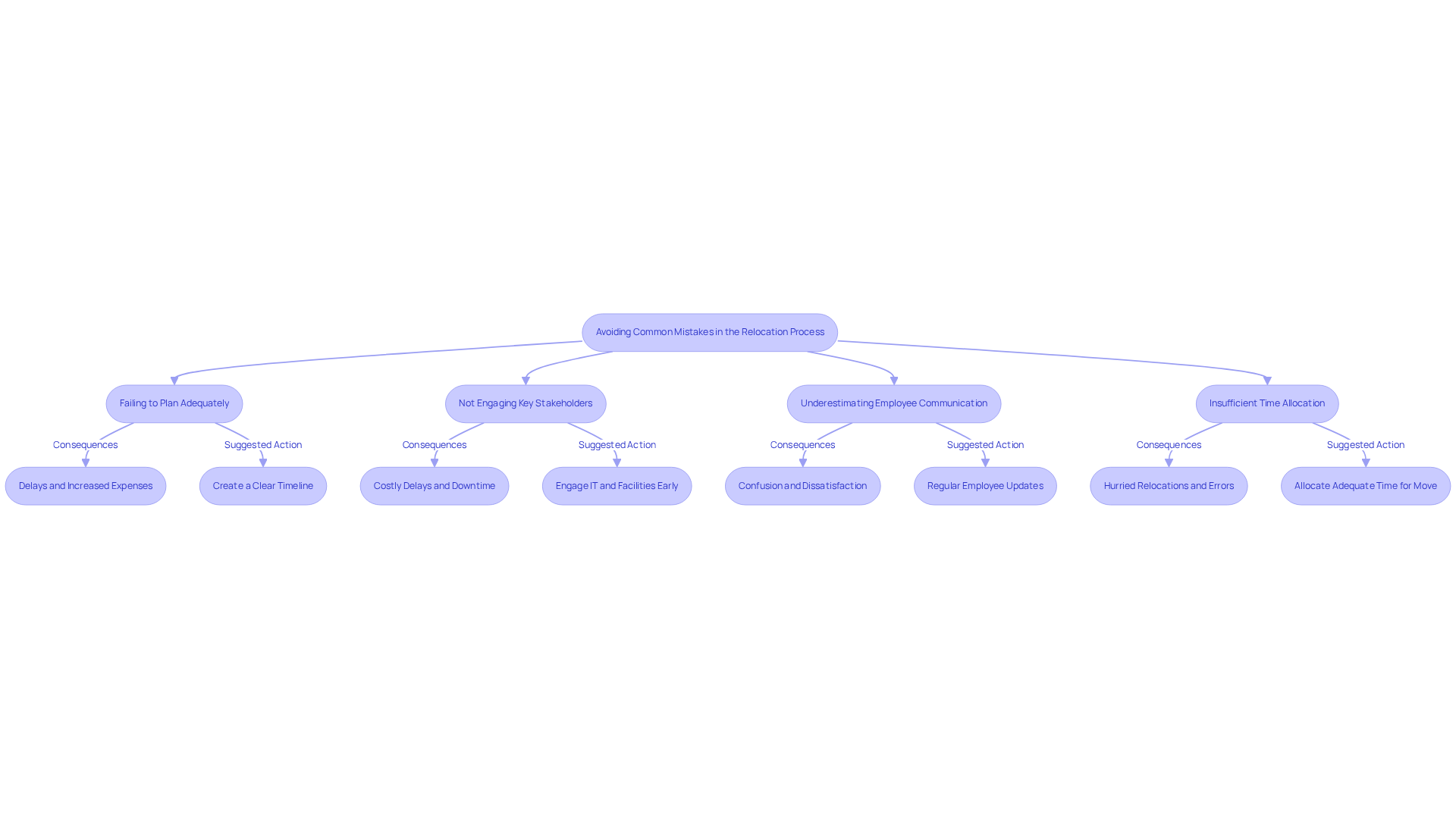
Recognising common pitfalls is essential for ensuring a seamless office move, as these missteps can significantly hinder the process. A major mistake is failing to plan adequately; without a clear timeline and defined objectives, organisations may encounter delays and increased expenses. Flux HQ specializes in creating tailored relocation plans that meet your specific organisational needs, ensuring that every aspect is addressed. This includes lease negotiations and legal support, which are vital for a successful move.
Another common mistake is failing to engage key stakeholders, including IT and facilities management, at the outset of the planning process. The IT department plays a crucial role in disconnecting and reconnecting hardware, and their early involvement can prevent costly delays and downtime. For instance, overlooking IT requirements can lead to disruptions in email access and server connectivity, which can significantly impact organisational operations.
Furthermore, underestimating the significance of employee communication can result in confusion and dissatisfaction among personnel. Involving employees early through feedback surveys and regular updates can address their needs. This approach fosters a supportive environment, ultimately boosting morale and productivity.
Finally, it is crucial to allocate adequate time for the move itself, including the configuration and testing of IT systems. Many businesses underestimate the time necessary for these critical tasks, resulting in hurried relocations and errors. By proactively addressing these issues and leveraging Flux HQ's rapid relocation support, you can significantly enhance the likelihood of a successful relocation.
Conclusion
A strategic approach is essential for a successful office relocation in London, where clarity and planning are paramount. By prioritising clear objectives, effective communication, and meticulous planning, organisations can ensure that their move aligns with long-term goals and enhances operational efficiency. A well-planned move can help avoid disruptions and set the stage for future growth.
Key insights from this article highlight the importance of:
- Establishing a comprehensive timeline
- Selecting the right office space that fits the business model
- Maintaining open lines of communication with employees throughout the process
Getting stakeholders involved early, steering clear of common mistakes, and using the right tools can really make the relocation process smoother. By tackling these challenges head-on, businesses can approach their move with confidence and clarity.
Ultimately, the significance of a well-executed office relocation cannot be overstated. It serves as an opportunity for transformation and growth, allowing organisations to adapt to changing needs and foster a positive work environment. By embracing these best practices, organisations can not only ensure a seamless transition but also unlock new opportunities for success in their evolving landscape.
Frequently Asked Questions
What is the first step in planning an office relocation?
The first step is to establish clear objectives that align with your organisational strategy, considering factors such as growth plans, employee needs, and operational efficiency.
How long should the timeline be for an office move?
Typically, businesses should expect a timeline of 6 to 12 months for their move. For larger moves exceeding 20,000 square feet, planning should ideally start 18 to 24 months in advance.
What are some key milestones to include in the relocation timeline?
Key milestones include the completion of the property search, lease negotiations, and the actual moving date.
What tools can help manage the office relocation process?
Tools like Trello or Asana can help track progress and keep all stakeholders informed of their responsibilities.
What are the consequences of neglecting the relocation timeline?
Neglecting the timeline can lead to operational disruptions and unexpected costs.
How does a well-structured approach benefit the relocation process?
A well-structured approach facilitates a seamless transition and positions the organisation for future success.
List of Sources
- Establish Clear Objectives and Timeline for Relocation
- Office Relocation Can Transform Your Business (https://oktra.co.uk/insights/office-relocation-as-a-catalyst-for-business-transformation)
- 10 Essential Steps for a Smooth Office Relocation in 2026 (https://linkedin.com/pulse/10-essential-steps-smooth-office-relocation-2026-hughes-marino-okxmc)
- Office Relocation Timeline: When Should You Start Planning? - Stoneway (https://stoneway-re.com/expert-hub/office-relocation-timeline-when-should-you-start-planning)
- News & Insights | Ede's Commercial Relocation Experts (https://edes.com/news)
- The Benefits of Office Relocation (https://business.com/articles/office-relocation-positives-to-moving-your-business)
- Choose an Office Space that Fits Your Business Model
- How Companies Choose Workspaces in 2026 | eOffice (https://eoffice.net/how-companies-choose-workspaces-in-2026)
- Why Startups Are Expanding Their Workspace (2026 Update) (https://adaptworkspace.com/news/start-ups-expanding-their-workspace)
- Choosing Office Space That Will Scale With Your Business | Regus (https://regus.com/en-gb/office-space/choosing-office-space-that-will-scale-with-your-business)
- How Startups and Scaleups Can Benefit From Flexible Office Space (https://canvasoffices.co.uk/news/how-startups-and-scaleups-can-benefit-from-flexible-office-space)
- Communicate Effectively with Your Team Throughout the Move
- Managing Employee Relocation During An Office Move | Ede's London (https://edes.com/news/how-to-efficiently-manage-employee-relocation-during-an-office-move)
- How to Communicate Your Office Relocation to Stakeholders (https://harrowgreen.com/how-to-communicate-your-office-relocation-to-clients-and-employees)
- Constant communication was the key to a smooth office relocation | HRMorning (https://hrmorning.com/constant-communication-was-the-key-to-a-smooth-office-relocation)
- How to communicate an office relocation to your employees (https://peldonrose.com/news/how-to-communicate-an-office-relocation-to-your-employees)
- Tips for Communicating Office Relocation to Clients and Business Partners (https://crownworkspace.com/id/knowledge-base/communicating-office-relocation)
- Avoid Common Mistakes in the Relocation Process
- 10 Biggest Mistakes When Moving Offices (And How To Avoid Them) (https://burton-smith.co.uk/post/10-biggest-mistakes-when-moving-offices-and-how-to-avoid-them)
- Avoid These Common Mistakes for Your Office Relocation - Britannia Movers International (https://britannia-movers.co.uk/news/avoid-these-common-mistakes-for-your-office-relocation)
- Avoiding the Top 10 Pitfalls of Relocating a Business - Bishop's Move (https://bishopsmove.com/blog/moving-a-business-office-top-10-pitfalls-and-how-to-avoid-them)
- Common Mistakes to Avoid When Moving Office - Reactive Relocations (https://reactiverelocations.co.uk/news/common-mistakes-to-avoid-when-moving-office)
More Articles
Back to Industry Knowledge
107 Cheapside London EC2V 6DN: A Verification-First Shortlist Guide
Assess 107 Cheapside London EC2V 6DN with a verification-first checklist for availability, costs, facilities, access and terms.

Should Great Portland Street Be on Your London Office Shortlist?
Assess Great Portland Street London for your office shortlist with dated area evidence, workspace checks and lease questions.

Office Fit-Out Services in the UK: A Readiness Guide for Growing Businesses
Learn how UK office fit-out services can turn headcount, space, budget and growth plans into a provider-ready brief.

