
Navigate Business Rates Change: A Step-by-Step Guide for Startups
Navigate the upcoming business rates change with our essential step-by-step guide for startups.
Introduction
For many startups, understanding business rates can feel like a daunting task, particularly with impending changes. As new multipliers and relief options emerge in 2026, grasping the implications of these adjustments is crucial for financial planning and operational success. Startups must find ways to adapt to these evolving business rates to secure their growth and sustainability in a competitive market.
Understand Business Rates: Definition and Calculation
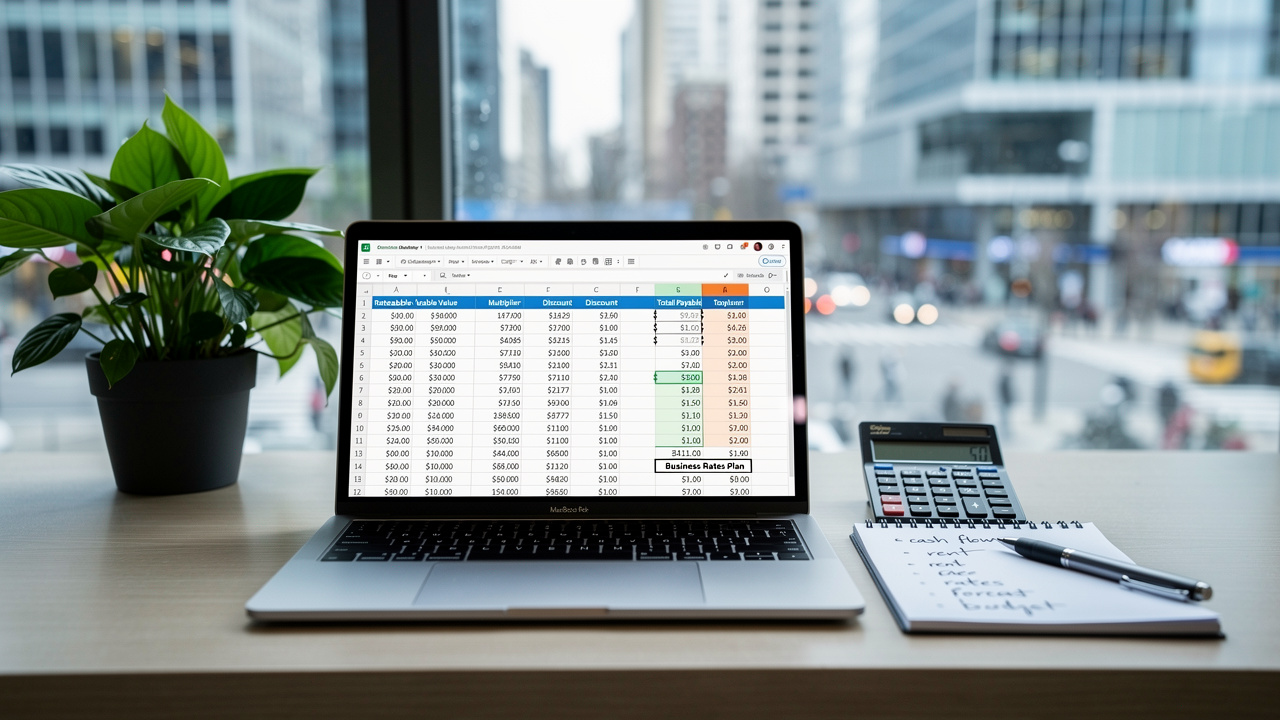
Navigating business rates change can be daunting for startups, particularly with the impending changes to commercial rates. Business charges, or non-domestic taxes, represent a significant concern, especially as they apply to various commercial properties like offices and shops. The assessable value (AV) of a property reflects the estimated annual rent it would command on the open market. To accurately calculate your business rates bill, here’s how you can proceed:
- Determine the Rateable Value: Access the rateable value of your property through the Valuation Office Agency (VOA) website or your local council's site.
- Multiply by the Rating Multiplier: The government sets the rating multiplier, which varies annually. Multiply your property's assessable value by this multiplier to calculate your total charges.
- Adjust for Discounts: Apply any relevant discounts or assistance, such as small business tax exemptions, to reduce your final bill. For instance, if your property has a value of £12,000 and the multiplier is 0.499, your total charges would amount to £5,988. If you qualify for a 50% discount, your final bill would be lowered to £2,994.
For startups, grasping these calculations is essential to avoid unexpected financial pitfalls. As of April 2026, a significant business rates change will take effect, including new multipliers and assistance schemes aimed at supporting small enterprises. For example, the small business multiplier will be set at 43.2p, while the standard multiplier will be 48p. Additionally, transitional relief will cap increases for small properties at 10%, helping to ease the financial burden during this adjustment period.
To further assist startups in navigating these financial obligations, Flux HQ provides innovative workspace and cost calculators. These tools help you understand the average costs and floor space required for your industry, allowing for tailored business solutions. By utilising Flux HQ's Space Calculator, you can input your specific needs to estimate the area required for your ideal workspace setup. Additionally, the Office Cost Calculator provides an estimated price range for your required office space, enhancing budget control and cost clarity in office rentals. Case studies suggest that numerous small enterprises, especially in the retail and hospitality industries, may encounter an average business rates change of 52% because of the forthcoming revaluation. Failing to understand your property's assessable value could lead to financial strain, jeopardising your business's future.

Identify Recent Changes in Business Rates and Their Implications
As of April 2026, the business rates change will significantly reshape the landscape for startups, necessitating careful financial planning. Key changes include:
- New Multipliers: The introduction of five distinct multipliers based on property type and value will replace the existing two. This modification indicates that business rates change, which may lead companies across diverse sectors to face varying charges that influence their financial strategies.
- Revaluation Process: A thorough reassessment of all commercial properties will take place, potentially resulting in higher rates for enterprises, particularly those located in prime areas such as Mayfair and Soho. This reassessment may lead to increased financial burdens for businesses, particularly in high-demand locations where business rates change.
- Loss of Reliefs: The phase-out of certain reliefs, including the 40% discount for retail, hospitality, and leisure enterprises, could result in higher costs for startups operating in these sectors. Consequently, startups may need to adjust their budgets significantly due to the business rates change that accommodates these increased costs.
To navigate these changes effectively, startups should prepare by reviewing their current rateable values and considering how the business rates change will impact their financial planning. Utilising Flux HQ's workspace and cost calculators can provide valuable support during this transition. By using the Office Space Calculator, companies can enter their specific requirements to estimate the area needed for their ideal workspace arrangement. Additionally, the Office Cost Calculator provides an estimated price range for office rentals, enhancing budget control and cost clarity during this transitional period. Working with a commercial real estate strategist can offer customised insights and strategies to navigate these changes effectively, ensuring that organisations remain agile in a shifting landscape. Ultimately, adapting to these changes will be crucial for startups aiming to thrive in an evolving market.

Explore Business Rates Relief Options for Startups
Startups often struggle with high operational costs, making financial relief crucial. Here are some key reliefs to consider:
- Small Enterprise Rate Assistance: Properties valued under £15,000 may be eligible for this assistance, which can significantly lower charges, potentially removing them entirely for properties valued at £12,000 or less.
- Assisting Small Enterprise Support: This assistance is vital for enterprises that have lost some or all of their small enterprise financial support due to revaluation on 1 April 2026. It helps mitigate sudden increases in business rates change by capping annual increases at £800 for the 2026/27 tax year.
- Retail, Hospitality, and Leisure Assistance: Although this assistance is being phased out, enterprises in these sectors should check for any transitional supports that may apply until the changes take full effect. For the 2026/27 period, enterprises with a rateable value below £51,000 will use a specific small enterprise multiplier of 43.2p.
- Charitable and Community Amateur Sports Club Assistance: Startups functioning as charities or sports clubs may qualify for extra support, further decreasing their financial burden.
- Electric Vehicle Charging Points Support: Qualifying properties that set up electric vehicle charging points will obtain a 10-year 100% tax exemption, aiding sustainability efforts.
If you wish to apply for these benefits, simply reach out to your local council and ensure you have the required documents ready. Keeping updated on these choices can assist startups in managing their expenses efficiently and navigating the intricacies of commercial charges. As the Valuation Office Agency indicates, 'From 1 April 2026, the method we use to determine your commercial charges will change,' making it essential for startups to understand how business rates change and the available relief options. Understanding these relief options is vital for startups aiming to thrive in a competitive market.

Develop a Strategic Office Space Plan in Response to Business Rates Changes
Startups often struggle with the business rates change, which can hinder their growth and operational efficiency. A strategic workspace plan can help address these challenges effectively. To develop an effective workspace strategy, consider the following essential steps:
- Assess Current Space Needs: Evaluate your existing workspace to determine if it meets operational requirements. Consider factors such as location, size, and amenities that support your team's productivity and culture.
- Explore Flexible Workspace Solutions: With the potential for increased rates, consider flexible workspace options like coworking areas or serviced suites. These solutions can provide cost-effective alternatives that allow for scalability and adaptability as your business evolves. Flux HQ provides fully managed, furnished, and customisable serviced workspace leases that are perfect for short-term flexibility, allowing you to adapt the area to suit your branding and operational requirements.
- Utilise Advanced Tools: Leverage Flux HQ's AI Workspace Search and Workspace Space Calculator tools to identify suitable spaces that align with your budget and operational needs. These tools can streamline the search process and provide valuable insights into available options, including modern monitoring solutions that track usage across different locations, helping you make informed decisions about your office space.
- Negotiate Lease Terms: Collaborate with a commercial real estate strategist to negotiate flexible lease terms. Look for options that include early termination clauses or expansion possibilities, allowing your organisation to remain agile in response to market fluctuations. As Andreea Neculae observes, "Flexible workspaces are frequently situated in well-connected areas, near public transit, commercial districts, and daily services," which can improve your operational flexibility.
- Plan for Future Expansion: Anticipate your company's growth trajectory by ensuring your workspace plan accommodates potential increases in personnel or operational changes. This foresight will help you avoid the pitfalls of being locked into unsuitable long-term leases. A case study contrasting flexible workspaces with conventional leases emphasises how flexible environments offer a more adaptable solution for companies, permitting shorter commitments and easier scaling.
By adopting a strategic approach to workspace planning, startups can not only navigate cost fluctuations due to business rates change but also enhance their long-term viability in a competitive landscape.

Conclusion
For startups, grappling with the complexities of business rates changes is crucial for establishing a robust financial foundation. Understanding these changes, especially the adjustments coming in April 2026, is vital for a startup's operational strategy and financial planning. By grasping the calculation of business rates and the available relief options, startups can better position themselves to manage costs effectively.
Key insights from this guide highlight the importance of:
- Determining the rateable value of properties
- Understanding the new multipliers
- Recognising the potential loss of reliefs that could affect financial stability
Additionally, exploring strategic office space planning and utilising tools like Flux HQ's calculators can provide startups with the necessary resources to adapt to these changes. The emphasis on flexible workspace solutions and negotiating favourable lease terms further underscores the need for agility in a shifting market.
Ultimately, navigating business rates changes presents both challenges and opportunities for growth. Startups should actively keep abreast of the changing business rates landscape, seek out relief options, and develop strategic plans that align with their long-term goals. By doing so, they can not only mitigate financial risks but also seize opportunities for innovation and expansion in a competitive environment.
Frequently Asked Questions
What are business rates?
Business rates, also known as non-domestic taxes, are charges applied to various commercial properties such as offices and shops. They represent a significant financial concern for businesses.
How is the assessable value (AV) of a property determined?
The assessable value reflects the estimated annual rent a property would command on the open market.
How can I calculate my business rates bill?
To calculate your business rates bill, determine the rateable value of your property, multiply it by the government-set rating multiplier, and adjust for any relevant discounts or assistance.
Where can I find the rateable value of my property?
You can access the rateable value of your property through the Valuation Office Agency (VOA) website or your local council's site.
What is the rating multiplier?
The rating multiplier is a government-set figure that varies annually and is used to calculate the total charges based on the property's assessable value.
Can I receive discounts on my business rates?
Yes, you can apply relevant discounts or assistance, such as small business tax exemptions, to reduce your final business rates bill.
What changes to business rates will take effect in April 2026?
Significant changes will include new multipliers and assistance schemes for small enterprises, with the small business multiplier set at 43.2p and the standard multiplier at 48p.
What is transitional relief?
Transitional relief is a measure that caps increases for small properties at 10%, helping to ease the financial burden during adjustments to business rates.
How can Flux HQ assist startups with business rates?
Flux HQ provides innovative workspace and cost calculators to help startups understand average costs and floor space requirements, allowing for tailored business solutions.
What impact will the forthcoming revaluation have on small enterprises?
Many small enterprises, particularly in retail and hospitality, may face an average business rates change of 52% due to the upcoming revaluation. Understanding your property's assessable value is crucial to avoid financial strain.
List of Sources
- Understand Business Rates: Definition and Calculation
- Business rates revaluation 2026 (https://gov.uk/government/news/business-rates-revaluation-2026)
- Business rates revaluation 2026 (https://enfield.gov.uk/services/business-and-licensing/business-rates-revaluation-2026)
- Changes to business rates from April 2026 (https://buckinghamshire.gov.uk/business/business-rates/changes-to-business-rates-from-april-2026)
- What will the new business rates mean for your bottom line? (https://howdengroup.com/uk-en/news-insights/what-will-new-business-rates-mean-your-bottom-line)
- What are business rates? Small businesses prepare for revaluation (https://simplybusiness.co.uk/knowledge/business-tax/what-are-business-rates)
- Identify Recent Changes in Business Rates and Their Implications
- Business rates revaluation 2026 (https://gov.uk/government/news/business-rates-revaluation-2026)
- Changes to business rates multipliers from 2026 (https://bristol.gov.uk/business/business-rates/changes-to-business-rates-multipliers-from-2026)
- Business rates - hospitality and the 2026 revaluation - UKHospitality (https://ukhospitality.org.uk/business-rates-hospitality-and-the-2026-revaluation)
- How the 2026 Business Rates Update Will Impact UK Businesses (https://makesworth.co.uk/how-the-2026-business-rates-update-will-impact-uk-businesses)
- Explore Business Rates Relief Options for Startups
- Changes to business rates from April 2026 (https://buckinghamshire.gov.uk/business/business-rates/changes-to-business-rates-from-april-2026)
- Business rates relief (https://gov.uk/business-rates-relief/small-business-rate-relief)
- Changes to business rates from 1 April 2026 (https://redditchbc.gov.uk/business/tax-funding-finance/changes-to-business-rates-from-1-april-2026)
- Business Rates changes from April 2026 (https://somerset.gov.uk/business-economy-and-licences/claim-a-business-rate-relief-or-exemption/business-rate-changes-from-april-2026)
- Supporting Small Business Relief 2026 | Torridge District Council (https://torridge.gov.uk/article/21357/Supporting-Small-Business-Relief-2026)
- Develop a Strategic Office Space Plan in Response to Business Rates Changes
- Boost Your Business in 2026: Flexible Workspace Solutions to Help You Grow | BusinessLodge Blogs (https://businesslodge.co.uk/blog-article/boost-your-business-in-2026-flexible-workspace-solutions-to-help-you-grow)
- Why Flexible Workspaces Are Becoming Essential for UK Small Businesses in 2026 » Aldershot Enterprise Centre (https://aldershotenterprisecentre.co.uk/why-flexible-workspaces-are-becoming-essential-for-uk-small-businesses-in-2026)
- Agility Over Square Footage: A Guide to Modern Workspace Solutions (https://coworkingcafe.com/blog/flexible-office-space-guide-2026)
- Flex Comes of Age: What will 2026 bring for Flexible Workspace (https://orega.com/news/flexible-workspace-trends)
- Flexible UK and London Office Space for Startups & Scale-Ups (https://cityflex.co.uk/article/startups-scaleups-office-space)
More Articles
Back to Industry Knowledge
107 Cheapside London EC2V 6DN: A Verification-First Shortlist Guide
Assess 107 Cheapside London EC2V 6DN with a verification-first checklist for availability, costs, facilities, access and terms.

Should Great Portland Street Be on Your London Office Shortlist?
Assess Great Portland Street London for your office shortlist with dated area evidence, workspace checks and lease questions.

Office Fit-Out Services in the UK: A Readiness Guide for Growing Businesses
Learn how UK office fit-out services can turn headcount, space, budget and growth plans into a provider-ready brief.

