
Best Practices for the Future of Offices: Adapting to New Work Trends
Explore best practices for the future of offices, enhancing collaboration and employee engagement.
Introduction
The modern office is undergoing a significant transformation, evolving from a traditional workspace into a dynamic centre for collaboration and innovation. As businesses navigate the complexities of hybrid work models and shifting employee expectations, understanding best practices for office design becomes crucial. Organisations must strategically adapt their spaces to foster teamwork, enhance productivity, and support workforce well-being in this evolving landscape.
Redefine the Role of the Office for Future Success
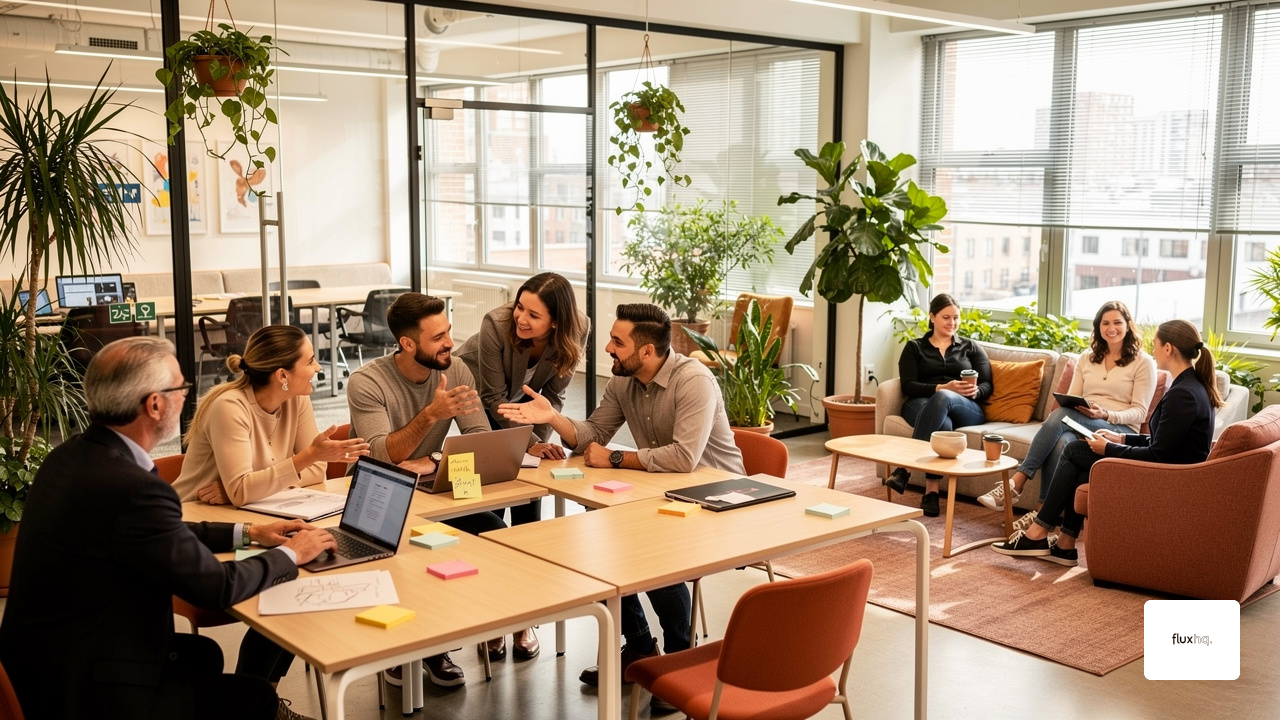
Many businesses still view the office as merely a place to work, missing the opportunity for a more engaging environment. The transformation of the office into a dynamic hub for collaboration and community building represents the future of offices. Here are some best practices for achieving this transformation:
- Create Multi-Functional Spaces: Design areas that can adapt to various purposes, such as meeting rooms that can be reconfigured for different group sizes or activities. This flexibility accommodates diverse work styles and team dynamics, fostering collaboration.
- Incorporate Technology: Leverage smart technology to enhance the office experience. Tools for virtual collaboration, including advanced video conferencing systems and interactive displays, can effectively bridge the gap between remote and in-office staff, ensuring seamless communication.
- Focus on Wellbeing: Prioritise staff wellbeing by designing spaces that incorporate natural light, biophilic elements, and ergonomic furniture. Research indicates that a healthy professional environment can significantly boost morale and productivity, leading to improved job performance and reduced turnover.
- Encourage Social Interaction: Establish informal gathering spaces, such as lounges or coffee areas, where employees can connect and collaborate outside of formal meetings. These social interaction points foster a sense of community and can spark innovative ideas, enhancing overall workplace culture.
- Adapt to Hybrid Models: As hybrid work becomes increasingly prevalent, ensure that office layouts support both in-person and remote work. This may involve creating designated areas for remote workers to plug in and collaborate effectively with their teams, thus maintaining inclusivity and engagement.
Ultimately, the future of offices can foster a more engaged workforce, driving innovation and success.

Establish Flexible Work-from-Home Guidelines
To foster a productive remote work culture, organisations must implement effective guidelines that address both employee needs and organisational goals:
- Set Clear Expectations: Clearly define hours, communication protocols, and performance metrics. Employees should understand what is expected of them while working remotely to maintain accountability. This clarity is vital, especially since 70% of managers believe that remote or hybrid arrangements enhance group productivity.
- Provide Necessary Tools: Equip employees with the technology and resources they need to work effectively from home. This includes access to collaboration tools, secure networks, and ergonomic furniture. Research shows that companies investing in the right technology see a significant boost in engagement and productivity among remote teams.
- Encourage Regular Check-Ins: Schedule regular one-on-one meetings and group check-ins to maintain communication and support. This practice helps combat the isolation many remote workers feel, as 88% report pressure to prove their productivity, while also ensuring alignment with team objectives.
- Promote Work-Life Harmony: Encourage staff to establish limits between professional and personal life. This can include flexible hours or designated spaces at home to help them separate tasks from leisure. This balance not only reduces burnout by 15% for hybrid workers compared to their on-site counterparts but also enhances overall job satisfaction.
- Collect Input: Regularly request opinions from staff regarding their remote experience. This can help identify areas for improvement and ensure that policies remain effective and relevant. A survey showed that 83% of staff believed their organisation's adaptable working methods required enhancement, highlighting the necessity for continuous conversation.
Ultimately, a well-structured remote work policy can transform challenges into opportunities for growth and innovation.

Remodel Office Spaces to Enhance Collaboration
To remodel office spaces effectively for enhanced collaboration, organisations must embrace strategic design principles.
- Design Open Spaces: Create open-plan areas that promote spontaneous interactions among staff. This layout enhances communication and collaboration among groups, fostering a culture of innovation. Research shows that employees who feel they belong perform 56% better, highlighting the need for such environments.
- Incorporate Collaboration Zones: Designate specific areas for teamwork, such as brainstorming rooms or project spaces equipped with whiteboards and technology for group discussions. These zones are essential for enhancing collaborative efforts and driving project success, aligning with the trend of offices becoming destinations for creativity and community. With Flux HQ's expertise, these spaces can be tailored to align with your brand and operational requirements.
- Utilise Modular Furniture: Invest in modular furniture that can be easily rearranged to accommodate different group sizes and activities. This flexibility enables groups to adjust their environment according to their needs, fostering a dynamic workspace that accommodates various work styles. Flux HQ's fit-out management services ensure that your workspace is both functional and aesthetically aligned with your company's identity.
- Enhance Acoustics: Implement sound-absorbing materials and design features to minimise noise distractions in collaborative areas. Effective acoustic design, including smart acoustics that isolate voices for clearer communication, helps maintain focus while still promoting interaction, crucial for productive teamwork.
- Integrate Technology: Equip collaboration spaces with the latest technology, such as interactive screens and video conferencing tools, to facilitate seamless communication between in-office and remote team members. By 2026, offices will utilise AI-assisted meetings that transcribe and summarise discussions instantly, ensuring all employees can contribute effectively.
By implementing these strategies, organisations can cultivate spaces that encourage collaboration and spark innovation, leading to greater business success. As we approach 2026, the emphasis on emotional intelligence in office design will be paramount, influencing the future of offices.

Update Operational Practices for Agility and Efficiency
To thrive in an increasingly competitive landscape, organizations must enhance their operational agility and efficiency.
- Embrace Agile Methodologies: Implement agile project management techniques that foster flexibility and iterative progress. This approach enables teams to adapt swiftly to changes, improving project outcomes. Notably, 39% of Agile practitioners report the highest average project performance rates, indicating the effectiveness of these methodologies. By utilising Flux HQ's comprehensive facility management services, organizations can better support flexible methodologies, ensuring that teams have the resources they need to succeed.
- Streamline Processes: Regularly assess and optimise workflows to eliminate bottlenecks and redundancies. Many organizations struggle with inefficiencies that hinder productivity. This leads to significant cost savings and improved operational efficiency, as shown by numerous case studies highlighting successful integrations. Flux HQ's services can help identify inefficiencies and implement solutions that enhance overall workflow.
- Leverage Technology: Utilise advanced technology solutions, including automation tools and data analytics, to boost efficiency and informed decision-making. Automation can significantly reduce time spent on manual tasks, allowing teams to focus on high-value activities, which is crucial in today's fast-paced environment. Flux HQ's innovative office space and cost calculators can assist businesses in understanding their space requirements and optimising their office layouts for maximum productivity.
- Foster a Culture of Continuous Improvement: Encourage staff to identify areas for enhancement and propose solutions. This culture of innovation can result in enhanced methods and a more involved workforce, as nearly 60% of Agile practitioners indicate satisfaction due to better alignment with business needs. By integrating feedback mechanisms, Flux HQ can help organizations cultivate this culture effectively.
- Implement Flexible Work Arrangements: Offer flexible work schedules and remote work options to meet employee needs and preferences. This flexibility can enhance job satisfaction and retention, making organizations more resilient in the face of changing market dynamics. Flux HQ's facility management services can support these arrangements by ensuring that workspaces are adaptable and conducive to various working styles.
By embracing these strategies, organizations can boost their agility and efficiency, setting themselves up for success in the evolving business landscape ahead.

Conclusion
The evolution of office spaces presents both challenges and opportunities for organisations aiming to enhance employee engagement and productivity. Organisations must redefine the role of the office to transform these spaces into dynamic hubs that enhance employee engagement and drive success.
To achieve this transformation, organisations should focus on:
- Designing adaptable spaces
- Integrating advanced technology
- Prioritising employee wellbeing
- Fostering social interactions
Adapting to hybrid work models is essential to ensure that both in-office and remote employees feel included and engaged. Looking ahead, organisations must embrace these best practices to navigate the changing landscape of work effectively.
Prioritising flexibility and operational agility, alongside a focus on employee experience, will enable businesses to create office environments that meet current demands and anticipate future trends. These changes present a pivotal opportunity to redefine workplace culture and significantly enhance organisational performance.
Frequently Asked Questions
How should businesses redefine the role of the office?
Businesses should transform the office into a dynamic hub for collaboration and community building, rather than viewing it merely as a place to work.
What are multi-functional spaces and why are they important?
Multi-functional spaces are areas designed to adapt to various purposes, such as reconfigurable meeting rooms. They are important because they accommodate diverse work styles and team dynamics, fostering collaboration.
How can technology enhance the office experience?
Technology can enhance the office experience by leveraging smart tools for virtual collaboration, such as advanced video conferencing systems and interactive displays, which bridge the gap between remote and in-office staff.
What role does employee wellbeing play in office design?
Employee wellbeing is prioritized by designing spaces that incorporate natural light, biophilic elements, and ergonomic furniture, which can significantly boost morale and productivity, leading to improved job performance and reduced turnover.
Why is encouraging social interaction important in the workplace?
Encouraging social interaction through informal gathering spaces, like lounges or coffee areas, fosters a sense of community and can spark innovative ideas, enhancing overall workplace culture.
How should offices adapt to hybrid work models?
Offices should support both in-person and remote work by creating designated areas for remote workers to collaborate effectively with their teams, ensuring inclusivity and engagement.
What is the ultimate goal of transforming office spaces?
The ultimate goal is to foster a more engaged workforce, driving innovation and success within the organization.
List of Sources
- Redefine the Role of the Office for Future Success
- 2026 Office Design Trends (https://area.co.uk/news-knowledge/top-workspace-design-trends)
- Five corporate real estate strategies redefining workplace in 2026 (https://jll.com/en-uk/newsroom/five-corporate-real-estate-strategies-redefining-workplace-in-2026)
- Office Trends 2026: This is what the future of work looks like in the New Work era (https://sedus.com/en/whatsup/office-trends-2026-this-is-what-the-future-of-work-looks-like-in-the-new-work-era)
- Top 10 Strategic Office Design Trends of 2026 (https://360workplace.co.uk/news-insight/top-10-strategic-office-design-trends-of-2026)
- VIRTUAL WORKPLACES WILL DRAMATICALLY REDEFINE THE OFFICE & WORK CULTURE OF THE FUTURE | FE News (https://fenews.co.uk/edtech/virtual-workplaces-will-dramatically-redefine-the-office-work-culture-of-the-future)
- Establish Flexible Work-from-Home Guidelines
- CIPD | Flexible and hybrid working: Guidance for people professionals on planning and managing (https://cipd.org/uk/knowledge/guides/flexible-working)
- Remote work UK: how to create a flexible working policy (https://payfit.com/blog/flexible-working-policy)
- 40+ remote work productivity statistics, trends & data for 2026 (https://worktime.com/blog/statistics/remote-work-productivity-statistics-trends-data)
- Flexible Working Requests in 2026 | Vero HR (https://verohr.co.uk/news/blog/hr/flexible-working-requests-in-2026)
- The companies in London restricting staff from working from home (https://bbc.co.uk/news/articles/c8ew0jrjxz9o)
- Remodel Office Spaces to Enhance Collaboration
- 2026 Office Design Trends (https://area.co.uk/news-knowledge/top-workspace-design-trends)
- 5 Office Refurbishment Ideas 2026 | Maximise Space | Modernise (https://wensleygroup.co.uk/5-office-refurbishment-ideas-2026)
- Office Design Trends for 2026 | Blueprint Interiors (https://blueprintinteriors.com/insights/office-design-trends-for-2026)
- 7 Office Space Planning Tips for Hybrid Work in 2026 (https://hughesmarino.com/blog/2026/07/09/7-office-space-planning-tips-for-hybrid-work-in-2026)
- 11 Office Fit Out Ideas for Collaboration in 2026 (https://magscapes.com/blogs/magblog_magscapes_inspiration/11-office-fit-out-ideas-for-collaboration-in-2026?srsltid=AU7gw4WmncvblFNvL3qV0mozt-nxPisdR0aqE05wYo-3jdKUbZ0jbOO-)
- Update Operational Practices for Agility and Efficiency
- 17 Agile Statistics You Need to Know in 2026 (https://businessmap.io/blog/agile-statistics)
- Streamlining Business Operations for Better Efficiency | Magnetic (https://magnetic.app/blog/streamlining-business-operations-for-better-efficiency)
- Streamlining IT Operations: key trends and best practices | FDM Group (https://fdmgroup.com/news-insights/streamlining-it-operations-key-trends-and-best-practices)
- How to Achieve Operational Excellence in Business in 2026 (https://vegam.ai/blog/how-to-achieve-operational-excellence-in-business)
- Top 5 Agile Trends to Take You Safe Through 2026 and Beyond (https://icertglobal.com/blog/top-5-agile-trends-for-2026-and-beyond)
More Articles
Back to Industry Knowledge
Secure Office Space in St James's Park: A Step-by-Step Guide
Discover how to secure office space in St James's Park with our comprehensive step-by-step guide.
Secure Your Office Space in St Pancras: A Step-by-Step Guide
Discover essential steps to secure your ideal office space in St Pancras efficiently.
Master Office Space in Tower Hill: Key Practices for Startups
Discover essential strategies for securing office space in Tower Hill for startups.

